Combat envelope
Range and detection
Every bar uses the same 20 km scale. Surface detection is a visibility threshold, not a weapon range.
U.S.S.R.
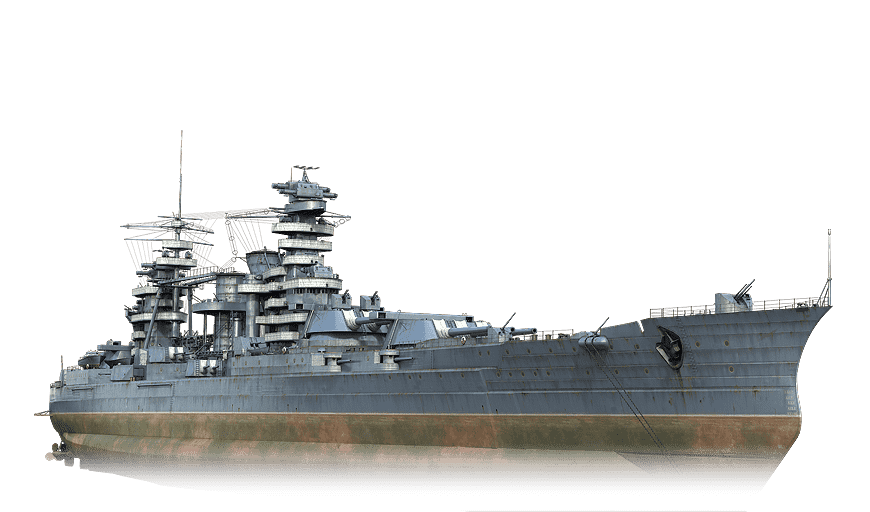
After the Izmail-class battlecruisers were laid down, the Naval General Staff commenced the development of a new generation of battleships. The requirements for the new ships were formulated between 1913 and 1914, but the development was halted when World War I broke out. The project was resumed only in 1916. A project variant proposed a warship with...
After the Izmail-class battlecruisers were laid down, the Naval General Staff commenced the development of a new generation of battleships. The requirements for the new ships were formulated between 1913 and 1914, but the development was halted when World War I broke out. The project was resumed only in 1916. A project variant proposed a warship with nine main guns housed in triple-gun turrets, a 275 mm-thick armored belt with a 100 mm-thick bulkhead behind it, 152 mm secondary guns, and a 30-knot speed. Work on the project was halted in 1917.
At a glance
Combat envelope
Every bar uses the same 20 km scale. Surface detection is a visibility threshold, not a weapon range.
Damage comparison
Bars are normalized only against this ship's highest listed hit. They are not salvo damage, expected damage or DPM.
Only positive values supplied by the API are shown.
Surface armament
Damage is the API's published maximum for one shell hit.
Automatic armament
Names, research prices and defaults are reported directly by the API.
Official modernization descriptions and listed purchase prices. Effects still depend on the slot and configuration used in game.
Reduces time to full speed
Research costs published in this ship's official progression data.
Cross-nation comparison
Closest same-tier, same-class matches from other nations, ranked by published base statistics.


