Combat envelope
Range and detection
Every bar uses the same 15 km scale. Surface detection is a visibility threshold, not a weapon range.
Pan-Asia
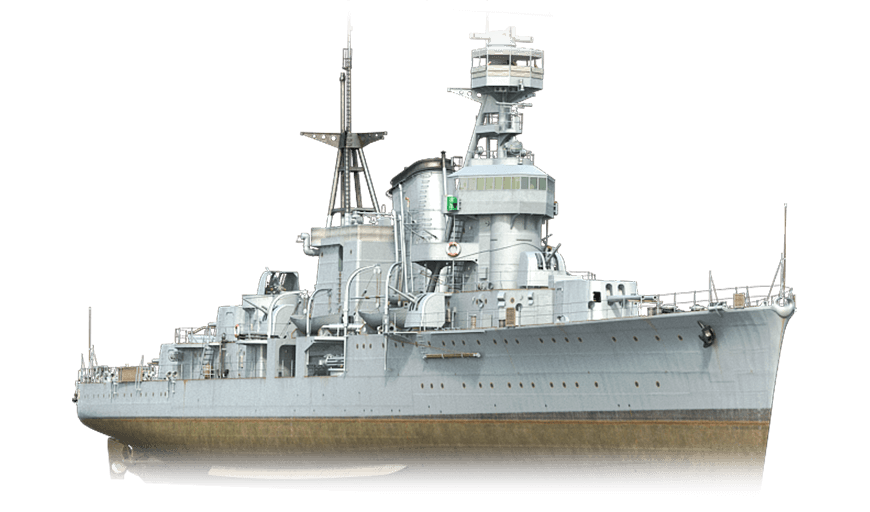
In 1931, the Japanese Harima shipbuilding company laid down two mini-cruisers—Ning Hai and Ping Hai—for the needs of the Chinese Navy, both based on cruiser Yūbari. Ning Hai was built in Japan and became part of the Chinese fleet in 1932. Both Chinese cruisers were sunk by Japanese aircraft at the start of the Sino-Japanese War in 1937. Between 1938 and...
In 1931, the Japanese Harima shipbuilding company laid down two mini-cruisers—Ning Hai and Ping Hai—for the needs of the Chinese Navy, both based on cruiser Yūbari. Ning Hai was built in Japan and became part of the Chinese fleet in 1932. Both Chinese cruisers were sunk by Japanese aircraft at the start of the Sino-Japanese War in 1937. Between 1938 and 1943, Ning Hai served as floating barracks in the Sasebo Naval Arsenal. In 1944, she was repaired and converted into an escort ship named Ioshima. On September 19, 1944, the former Chinese cruiser took a torpedo hit from USS Shad and sank.
At a glance
Combat envelope
Every bar uses the same 15 km scale. Surface detection is a visibility threshold, not a weapon range.
Damage comparison
Bars are normalized only against this ship's highest listed hit. They are not salvo damage, expected damage or DPM.
Only positive values supplied by the API are shown.
Surface armament
Damage is the API's published maximum for one shell hit.
Automatic armament
Underwater armament
533 mm Type6*
Names, research prices and defaults are reported directly by the API.
Official modernization descriptions and listed purchase prices. Effects still depend on the slot and configuration used in game.
Cross-nation comparison
Closest same-tier, same-class matches from other nations, ranked by published base statistics.


