Combat envelope
Range and detection
Every bar uses the same 10 km scale. Surface detection is a visibility threshold, not a weapon range.
Pan-Asia
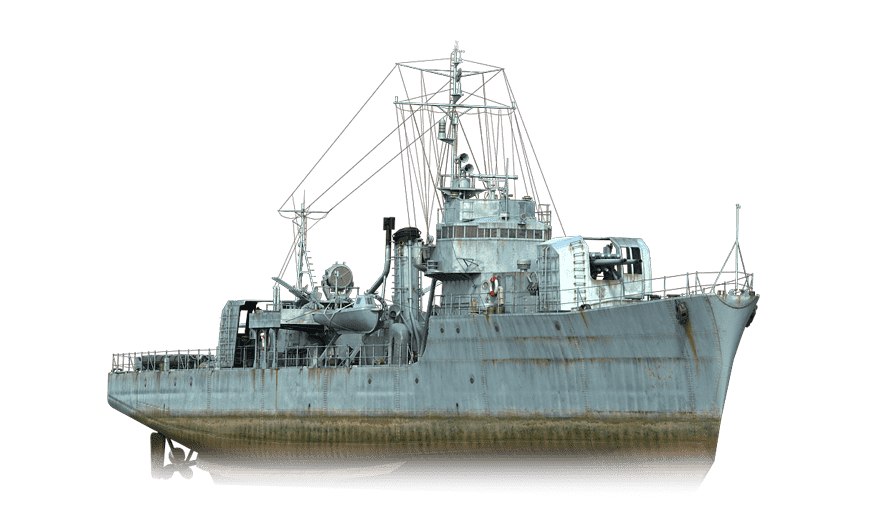
Taking advantage of a loophole in the London Naval Treaty that placed no restrictions on the number of ships with a displacement of up to 600 tons, Japan started building small ships in the 1930s that were classified as Kaibōkans—originally in Japan, this referred to obsolete ships repurposed for coastal defense needs. The project was developed by...
Taking advantage of a loophole in the London Naval Treaty that placed no restrictions on the number of ships with a displacement of up to 600 tons, Japan started building small ships in the 1930s that were classified as Kaibōkans—originally in Japan, this referred to obsolete ships repurposed for coastal defense needs. The project was developed by Mitsubishi. Kaibōkan No. 40 was built at the Fujinagata shipyard. After the surrender of Japan, the ship was used in the fleets of the Anti-Hitler coalition countries as a minesweeper, and in the August of 1947, she was transferred to the Chinese fleet and renamed Chengan. In 1949, the ship became part of the Republic of China Navy.
At a glance
Combat envelope
Every bar uses the same 10 km scale. Surface detection is a visibility threshold, not a weapon range.
Damage comparison
Bars are normalized only against this ship's highest listed hit. They are not salvo damage, expected damage or DPM.
Only positive values supplied by the API are shown.
Surface armament
Damage is the API's published maximum for one shell hit.
Automatic armament
Names, research prices and defaults are reported directly by the API.
Official modernization descriptions and listed purchase prices. Effects still depend on the slot and configuration used in game.
Research costs published in this ship's official progression data.
Cross-nation comparison
Closest same-tier, same-class matches from other nations, ranked by published base statistics.


