Combat envelope
Range and detection
Every bar uses the same 20 km scale. Surface detection is a visibility threshold, not a weapon range.
Germany
Under the terms of the Treaty of Versailles, Germany was permitted to retain six aging battleships of the Deutschland and Braunschweig classes. Upon reaching their designated age limits, these vessels could be replaced with ships weighing no more than 10,000 tons in displacement. In the 1920s, the heads of the Navy initiated extensive research into...
Under the terms of the Treaty of Versailles, Germany was permitted to retain six aging battleships of the Deutschland and Braunschweig classes. Upon reaching their designated age limits, these vessels could be replaced with ships weighing no more than 10,000 tons in displacement. In the 1920s, the heads of the Navy initiated extensive research into future ships to replace the old battleships. Several variants were proposed, including a design resembling the "Washington" cruisers. This particular project envisioned the use of eight 8-inch guns. The project was never implemented, but its further development led to the emergence of "pocket battleships."
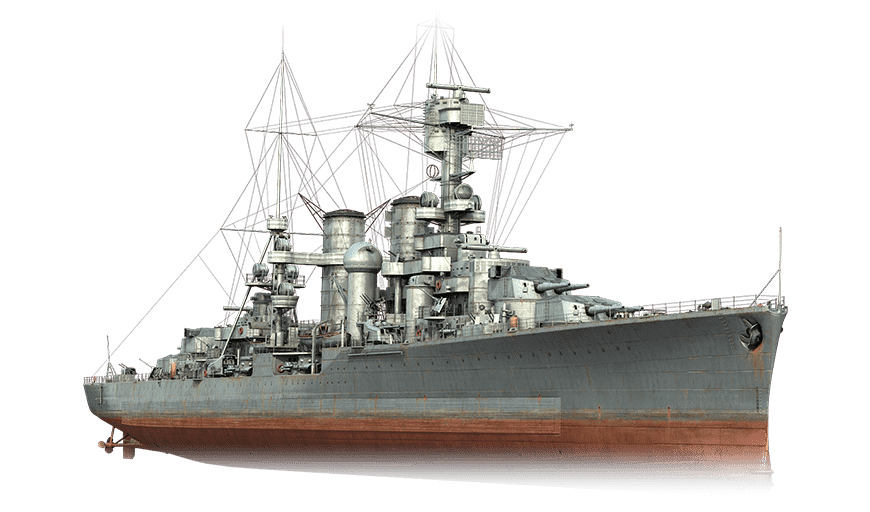
At a glance
Combat envelope
Every bar uses the same 20 km scale. Surface detection is a visibility threshold, not a weapon range.
Damage comparison
Bars are normalized only against this ship's highest listed hit. They are not salvo damage, expected damage or DPM.
Only positive values supplied by the API are shown.
Surface armament
Damage is the API's published maximum for one shell hit.
Automatic armament
Underwater armament
G7a T1
Names, research prices and defaults are reported directly by the API.
Official modernization descriptions and listed purchase prices. Effects still depend on the slot and configuration used in game.
Reduces time to full speed
Research costs published in this ship's official progression data.
Cross-nation comparison
Closest same-tier, same-class matches from other nations, ranked by published base statistics.


