Combat envelope
Range and detection
Every bar uses the same 10 km scale. Surface detection is a visibility threshold, not a weapon range.
U.S.A.
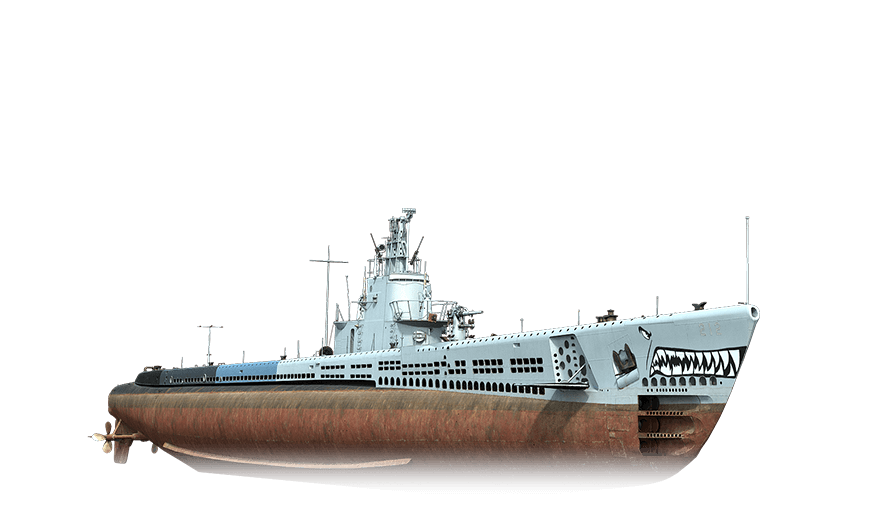
The U.S. Navy High Command conceived that "fleet submarines" were to complement the sluggish conventional battleships. With a high surface speed, heavy armament, and long operational range, they were supposed to conduct reconnaissance and finish off enemy ships once artillery duels between battleships ceased. However, after the attack on Pearl Harbor,...
The U.S. Navy High Command conceived that "fleet submarines" were to complement the sluggish conventional battleships. With a high surface speed, heavy armament, and long operational range, they were supposed to conduct reconnaissance and finish off enemy ships once artillery duels between battleships ceased. However, after the attack on Pearl Harbor, their strategy changed, and a new type—Gato—was geared for extended patrols. Comfortable for their crews, these submarines carried a large fuel supply and torpedoes. USS Gato was laid down in October 1940 and commissioned in December 1941. The submarine conducted thirteen combat missions, earning the same number of battle stars and the Presidential Unit Citation.
At a glance
Combat envelope
Every bar uses the same 10 km scale. Surface detection is a visibility threshold, not a weapon range.
Damage comparison
Bars are normalized only against this ship's highest listed hit. They are not salvo damage, expected damage or DPM.
Only positive values supplied by the API are shown.
Automatic armament
Underwater armament
Mark 29 mod 1
Names, research prices and defaults are reported directly by the API.
Official modernization descriptions and listed purchase prices. Effects still depend on the slot and configuration used in game.
Reduces time to full speed
Cross-nation comparison
Closest same-tier, same-class matches from other nations, ranked by published base statistics.