Combat envelope
Range and detection
Every bar uses the same 20 km scale. Surface detection is a visibility threshold, not a weapon range.
U.S.A.
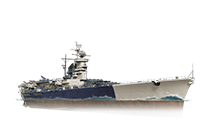
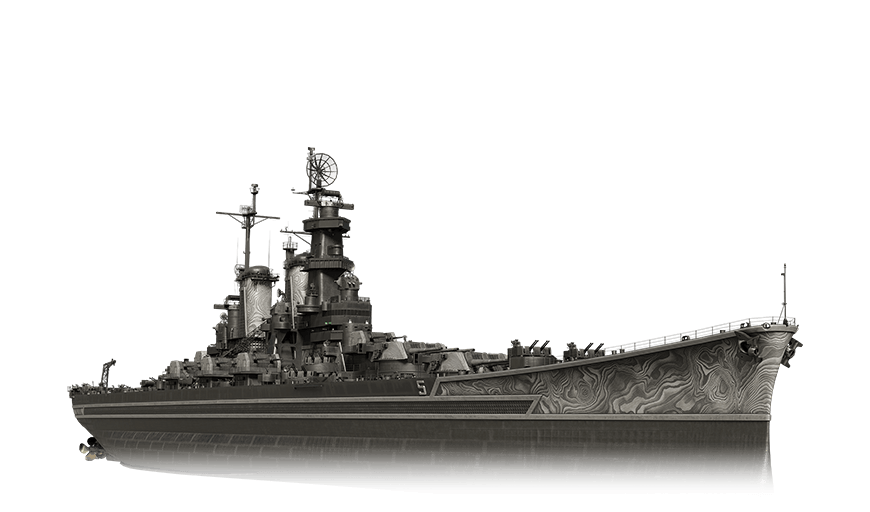
After the failure of the second London Naval Treaty but before the outbreak of World War II, the United States began preliminary design works with the intention of building ships specifically tailored for countering cruisers. In 1938, the U.S. Navy High Command provided technical specifications to initiate the preliminary development of cruisers armed...
After the failure of the second London Naval Treaty but before the outbreak of World War II, the United States began preliminary design works with the intention of building ships specifically tailored for countering cruisers. In 1938, the U.S. Navy High Command provided technical specifications to initiate the preliminary development of cruisers armed with six 305 mm guns and twelve 203 mm guns. Further development resulted in the creation of several draft designs for cruisers equipped with 305 mm main battery guns. Among the designs, the largest and most heavily armed ship featured four triple-gun main battery turrets.
At a glance
Combat envelope
Every bar uses the same 20 km scale. Surface detection is a visibility threshold, not a weapon range.
Damage comparison
Bars are normalized only against this ship's highest listed hit. They are not salvo damage, expected damage or DPM.
Only positive values supplied by the API are shown.
Surface armament
Damage is the API's published maximum for one shell hit.
Automatic armament
Names, research prices and defaults are reported directly by the API.
Official modernization descriptions and listed purchase prices. Effects still depend on the slot and configuration used in game.
Reduces time to full speed
Cross-nation comparison
Closest same-tier, same-class matches from other nations, ranked by published base statistics.